

New College Madison is an initiative of the SL Brown Foundation dedicated to developing courses related to the academic study of Christianity at the University of Wisconsin–Madison.
Available Courses
Explore our current available classes at UW.
ILS 110: Reason and Revelation in Western Thought
Taught by Tony Bolos, P.h.D. | FALL 2026: T/R 9:30 AM - 10:45 AM | SPRING 2027: T/R 9:30 AM - 10:45 AM
This course offers a historical overview and critical evaluation of Western thought as it developed through the interaction of philosophy and theology. Students will closely examine influential texts that shaped moral, religious, and philosophical commitments in the West, while also considering how the rise of modernity placed sustained pressure on these claims. Several influential texts will be examined, but we will pay close attention to the Hebrew and Christian Bibles, Plato’s dialogues, and Descartes’ Meditations. The course concludes by exploring how contemporary philosophers interpret, revise, and defend this tradition (moral, religious, and philosophical) in dialogue with its intellectual critics.
ILS 110: Modern Responses to the Western Tradition
Taught by Jordan Wessling, P.h.D. | FALL 2026: T/R 2:30 PM - 3:45 PM | SPRING 2027: T/R 2:30 PM - 3:45 PM
This course begins by examining the core commitments of the Western Tradition before turning to major modern critics who challenged traditional beliefs about God, morality, truth, and human nature. We will ask: What exactly were their criticisms? Why have they been so persuasive? And are their challenges decisive? Throughout the course, students will learn to read challenging texts carefully, evaluate arguments critically, and develop their own well-reasoned positions on enduring questions of faith, reason, and morality.This is where the description goes.
PHIL 501: Philosophy of Religion
Taught by Tony Bolos, P.h.D. | SPRING 2027: W, 2:45 PM - 4:45 PM
This course examines whether, and how, religious belief might be justified, drawing on both historical and contemporary sources. We begin with the nature of religious belief, then turn to traditional approaches to religious justification, including Aquinas’s Five Ways, Anselm’s ontological argument, and design arguments. We next consider non-evidentialist approaches to justification, especially Reformed epistemology and the appeal to religious experience. The course concludes with the major problems of religious belief: the problem of evil, the argument from divine hiddenness, and the relationship between science and religion. Throughout, students learn to reconstruct arguments, weigh objections, and develop and defend their own positions in writing.
FREE ACADEMIC RESOURCE
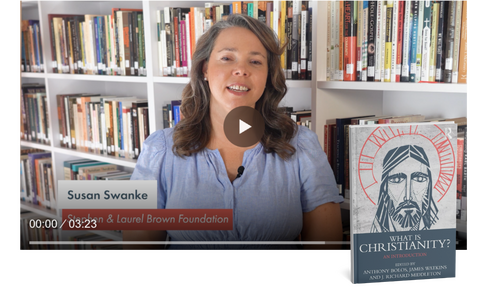
Explore What Is Christianity?, a free online course accompanying a book written and led by Tony Bolos, Director of New College Madison. Featuring leading theologians, biblical scholars, philosophers, and historians, each chapter is thoughtfully written by an expert in their field. Whether you're a student or simply curious about the Christian faith, begin your exploration here.
OUR TEAM

Questions about New College Madison? Fill out the form below. ⬇️